Walk into any youth game and you will see parents with everything from a phone to a camera that costs more than the team uniforms.
Here is the good news: the price of the gear is a poor predictor of who gets the keeper shots.
What matters is matching a few specific things to where your kid plays. This guide walks the choices from cheapest to most capable, and tells you plainly what you can skip.
The one thing that matters most: the lens, not the body
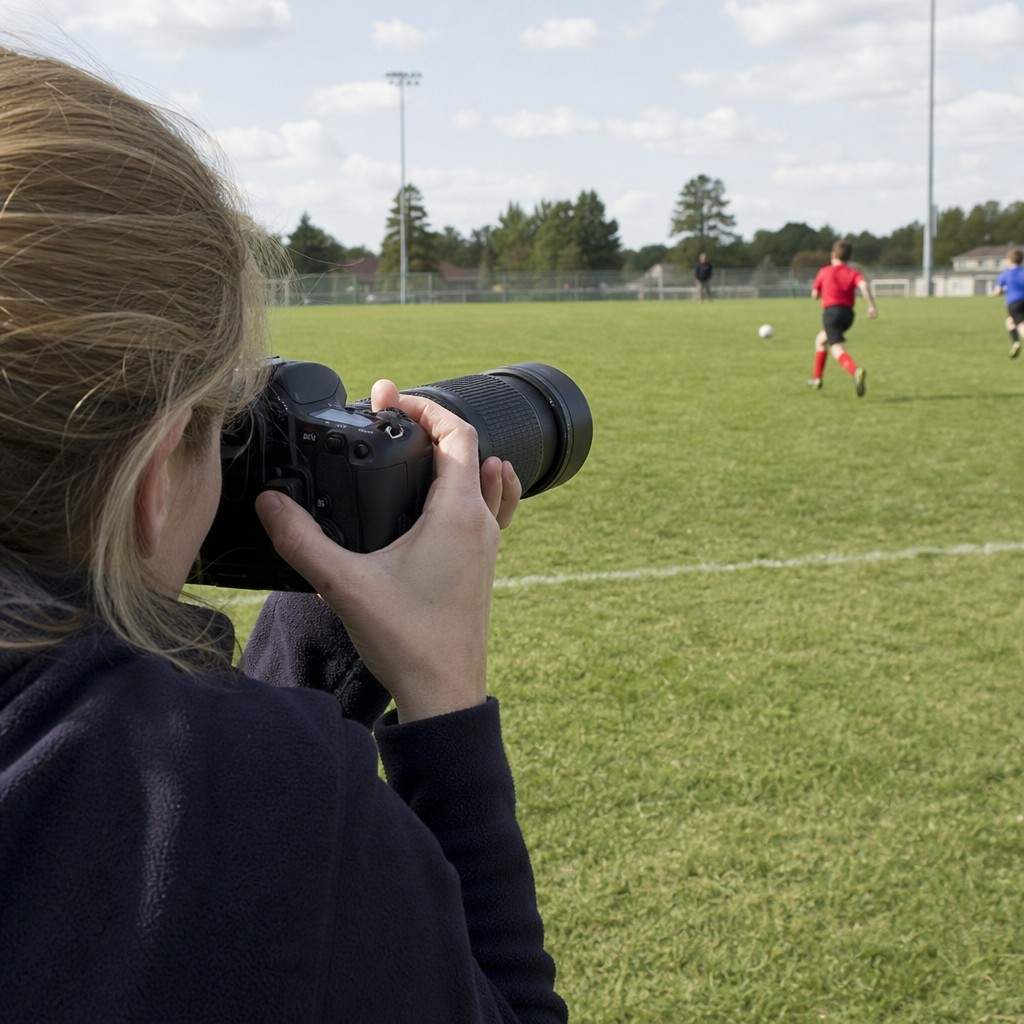
If you remember one idea from this page, make it this one.
For sports, the lens does far more for your photos than the camera body does. A lens decides the two things that make or break a game shot: how close you can get to the action, and how much light it can gather.
- Reach lets you fill the frame from the sideline instead of shooting a tiny figure across the field.
- Light, meaning a low f-number, is what lets you freeze motion in a dark gym.
A modest camera with the right lens beats an expensive camera with the wrong one, every single time.
Tier 0: the phone you already own
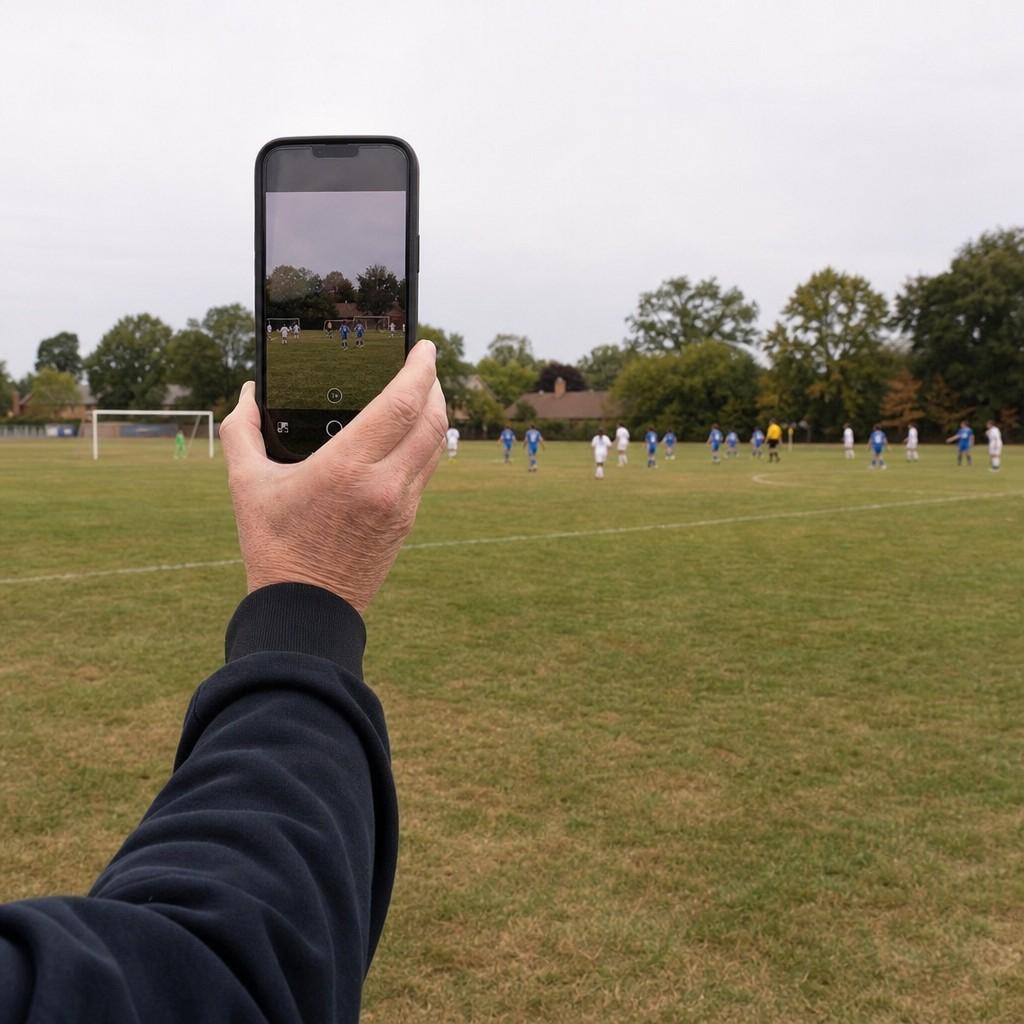
Start honest. A recent phone is a genuinely good outdoor sports camera in daylight.
- Outdoors, in good light, a phone handles soccer and baseball well. Use burst mode and get as close as the sideline allows.
- Indoors is where a phone hits a wall. Dim gyms and fast motion are more than a small phone sensor can handle, which is a problem with its own set of fixes.
If your kid only plays outdoor sports in daylight, you may not need to buy anything yet. Spend a season with your phone before you spend money.
Tier 1: an entry-level camera and its kit lens
The first real step up is an entry-level mirrorless or DSLR camera, usually sold with a basic zoom called a kit lens. Expect roughly 500 to 700 dollars new, and less used.
This setup shines outdoors and struggles indoors, and the reason is the kit lens. Kit zooms are slow, which means they stop gathering much light once you zoom in, often only f/5.6.
- Outdoor daylight: excellent. Fast autofocus and a real zoom are a big jump over a phone, and the settings for outdoor games are easy to dial in.
- Indoor gym: workable but tight. You will be pushing ISO hard to keep the shutter fast enough.
For a lot of families, this tier plus good technique is the whole answer.
Tier 2: add the lens that fixes the hard cases
If your kid plays indoor sports, or you want to fill the frame from a deep sideline, the upgrade is glass, not a new camera body.
Two kinds of lens solve the two problems:
- A telephoto zoom in the 70 to 200mm or 55 to 250mm range gives you reach for soccer, football, and baseball fields. It is worth taking a minute to compare telephoto zoom lenses on Amazon to see how much reach you get at each price.
- A fast prime, a fixed lens at f/1.8, gathers the light a dark gym demands, often for surprisingly little money.
Sport-Phot earns a small commission from qualifying Amazon purchases, at no cost to you.
This is the tier where indoor photos stop being a fight. A used 50mm f/1.8 is frequently the cheapest lens that changes the most.
What you can safely skip
You will see pricier options marketed hard. Most parents do not need them.
- A 2,000 dollar professional body. Autofocus on modern entry cameras is more than good enough for youth sports.
- An external flash. Most gyms ban flash during play, and outdoors you already have the sun.
- A bag full of lenses. One telephoto zoom for outdoors and one fast prime for indoors covers almost everything you will shoot.
Spend on the lens, learn the settings, and put the rest toward gas money for away games.
A simple recommendation
- Outdoor sports only, on a budget: your phone first, then a kit-lens camera if you want more reach.
- Indoor sports: an entry camera plus a fast prime lens is the highest-impact money you can spend.
- Both, and you want one setup: an entry camera, a telephoto zoom for outside, and a fast prime for inside.
None of this requires being a photographer. It requires the right lens and a few settings you choose once and reuse every game.