
The photo looks fine in the viewfinder. Then you get home and zoom in, and your kid is soft while the gym floor behind them is sharp.
That is not a random bad shot. That is a focus mode problem.
The camera focused once, the player moved, and the lens never caught up. Switching to continuous autofocus is the single highest-impact focus change a parent can make, and it costs nothing.
Single-shot focus versus continuous focus

Most cameras ship with single-shot focus on by default. In single-shot mode (called AF-S on Nikon and Sony, One Shot on Canon), you press the shutter halfway and the camera locks focus. If the subject stays still, that works.
For a moving player, it is almost useless. The camera locks on where your kid was, not where they will be by the time the shutter fires.
Continuous focus changes that completely.
In continuous mode (AF-C on most cameras, AI Servo on Canon), the camera keeps refocusing for as long as you hold the shutter button halfway down. It does not lock. It tracks. Press all the way to shoot and the focus is current, not stale.
That is the whole difference, and it matters more than any other focus setting a beginner can change.
How to use it during a game
The technique is simple once the mode is set.
- Half-press the shutter and hold it as the player moves across the frame.
- Keep the focus point on your kid as they run.
- Press fully to shoot, ideally while holding down burst mode.
The camera is refocusing continuously between frames. The subject stays sharp through the sequence instead of drifting soft after the first shot.
Half-press, track, then commit. The camera is doing the focusing work; your job is to stay on the player.
You do not need to release and half-press again before each shot. One sustained half-press through the whole play is the right approach.
Focus area modes, from single point to wide
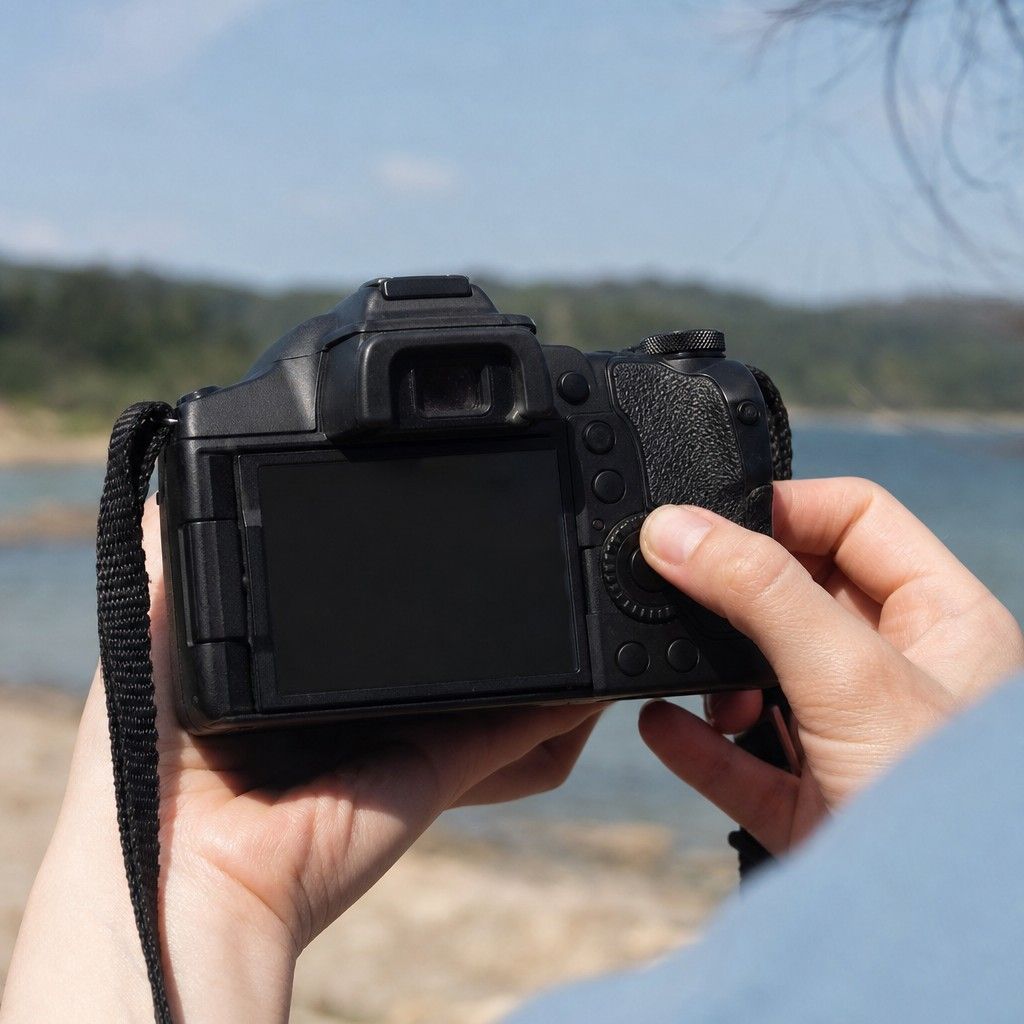
Continuous focus tells the camera to keep refocusing. The focus area mode tells it where to look in the frame.
There are usually three main options:
- Single point: you choose one focus point and the camera uses only that one. Accurate when you can keep it on your kid, but demanding on faster plays.
- Zone or group area: a cluster of focus points works together. More forgiving when the player moves around the frame. A good middle ground for most parents.
- Wide or automatic: the camera picks which subject to focus on across the whole frame. Easy, but on a crowded field it can grab the wrong player.
For most sideline shooting, a zone or group mode is the practical choice. It gives you more forgiveness than a single point without handing the decision completely over to the camera.
If you are finding that the wrong player keeps getting focus in wide mode, narrow down to zone. If zone feels too precise for fast, unpredictable motion, try wide for a game and see if it helps.
Subject tracking on newer cameras
Many mirrorless cameras released in the past few years have a separate feature called subject tracking, sometimes labeled as face and eye detection or animal and subject detection.
Turn it on for sports.
Subject tracking identifies a specific person in the frame and locks the focus there, even if the player moves, turns, or is briefly obscured by another player. It is different from simply choosing a wide focus area. The camera is actively following the identified subject.
This is especially useful for fast indoor play in a gym, where players cut and change direction in a small space. The camera holds the right person even when the framing shifts.
Check your camera’s menu for “tracking,” “subject detection,” or “face/eye AF” and enable it. If you have it, it does a lot of the tracking work for you on top of AF-C.
Back-button focus (optional, but worth knowing)
By default, half-pressing the shutter does two things at once: it starts focus and prepares to fire.
Back-button focus separates those two actions. You assign focus to a button on the back of the camera, usually labeled AF-ON or AEL. The shutter button only fires. You use your thumb to focus and your index finger to shoot.
It sounds like extra complexity, but for sports it solves a real problem: you can track a player with your thumb on the back button, then lift your thumb to lock focus if the subject briefly stops, without the camera refocusing on something behind them.
Not a day-one setting. Get comfortable with AF-C first.
Most parents shoot very well without back-button focus. Look up the setting for your specific camera model if you want to try it later.
Combine continuous focus with a fast shutter and burst
Focus keeps the subject sharp. But sharp and frozen are two different things.
Continuous focus handles where the camera is focused. Shutter speed handles whether the motion is frozen. For running play outdoors, 1/1000 second is the target. For fast play in a dark gym, 1/500 is the floor.
Burst mode brings the third piece. A header or a reach for the ball lasts less than half a second. Firing a burst through the whole play means the peak moment is somewhere in the sequence.
All three work together:
- AF-C keeps the focus on the player as they move.
- A fast shutter freezes the motion so the sharp focus shows up in the photo.
- Burst catches the right fraction of a second.
Set them all at once before the game starts. They reinforce each other. Any two of the three without the third leaves a gap.
On a phone
Phones handle continuous focus automatically. You do not need to set a mode.
The limitation is tracking. A phone’s focus algorithm refreshes quickly for nearby subjects but struggles to hold a specific player reliably when several people are moving in the frame.
The practical fix:
- Tap and hold on your kid before the play reaches you. Tap-and-hold locks the focus and exposure to that position. It is not perfect tracking, but it puts the camera’s attention where you want it.
- Use burst mode by holding down the shutter button.
- Get physically close when you can. Outdoor field sports give you more room to move along the sideline toward the play.
For crowded indoor play or plays at full-field distance, a phone’s tracking is a real limit. That is where the camera and lens choice for kids’ sports starts to matter.
Set this before the game
One-time setup, correct for every game after:
- Focus mode: continuous (AF-C on Nikon/Sony, AI Servo on Canon)
- Focus area: zone or group (or wide if your camera handles it cleanly)
- Subject tracking: on, if your camera has it
- Burst mode: on
- Shutter speed: 1/1000 for outdoor play, 1/500 for indoor
The next time a photo goes soft, it almost certainly will not be a focus mode problem.