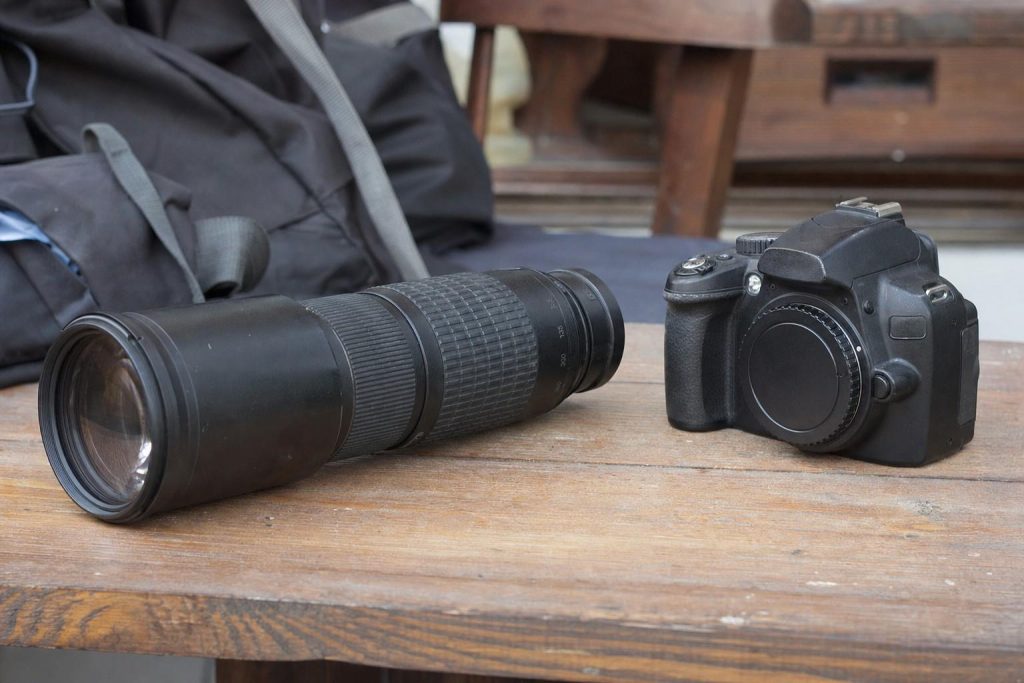
The gap between a phone shot and a real game photo is usually one thing: reach.
A telephoto lens lets you fill the frame from the sideline without walking onto the field. The face, the kick, the header: they become the subject instead of a small figure in the distance.
The right answer depends on where your kid plays, not on which lens a reviewer ranks highest.
What focal length actually means

Focal length is the number followed by mm on a lens, such as 70mm or 200mm. A higher number means more reach into the frame.
Think of it as how close the lens makes the subject appear. A 200mm lens makes a player look roughly four times closer than a 50mm lens would from the same spot.
For youth sports, the practical range runs from 70mm on the short end to around 300mm on the long end.
- 70 to 200mm is the workhorse range. It covers soccer, baseball, and basketball from a close sideline.
- 55 to 250mm is common on entry cameras as an affordable step up from the kit lens.
- Up to 300mm earns its place on a full-size soccer or football field, where the far end of the pitch is genuinely far away.
Fill the frame: enough zoom, or your own feet, turns a tiny figure into a real photo.
The venue decides how much reach you need. A school gym or a small baseball diamond at 100 to 200mm is plenty. A high school football field where the far hash is 50 yards out is where 300mm starts to earn its keep.
How much reach you actually need, by venue
Start with where your kid plays most, not where they might play someday.
Indoor venues (gym, pool, ice rink) are tighter spaces. The problem indoors is light, not distance. At court level, 200mm is more reach than you need.
A quick split by venue:
- Gyms and pools: 70 to 200mm is more than enough. You are close. Go after aperture, not focal length.
- Soccer and football fields: a midfield shot puts the opposite side 40 to 60 yards out. Something in the 70 to 200mm range fills the frame from a deep sideline without a specialist lens.
- Baseball and softball: youth diamonds are small, 200mm is plenty. High-school fields are longer.
Match the lens to the field, not to the sport name.
A 70 to 200mm covers the majority of what sports parents shoot. Longer than 300mm is niche territory.
What the f-number tells you
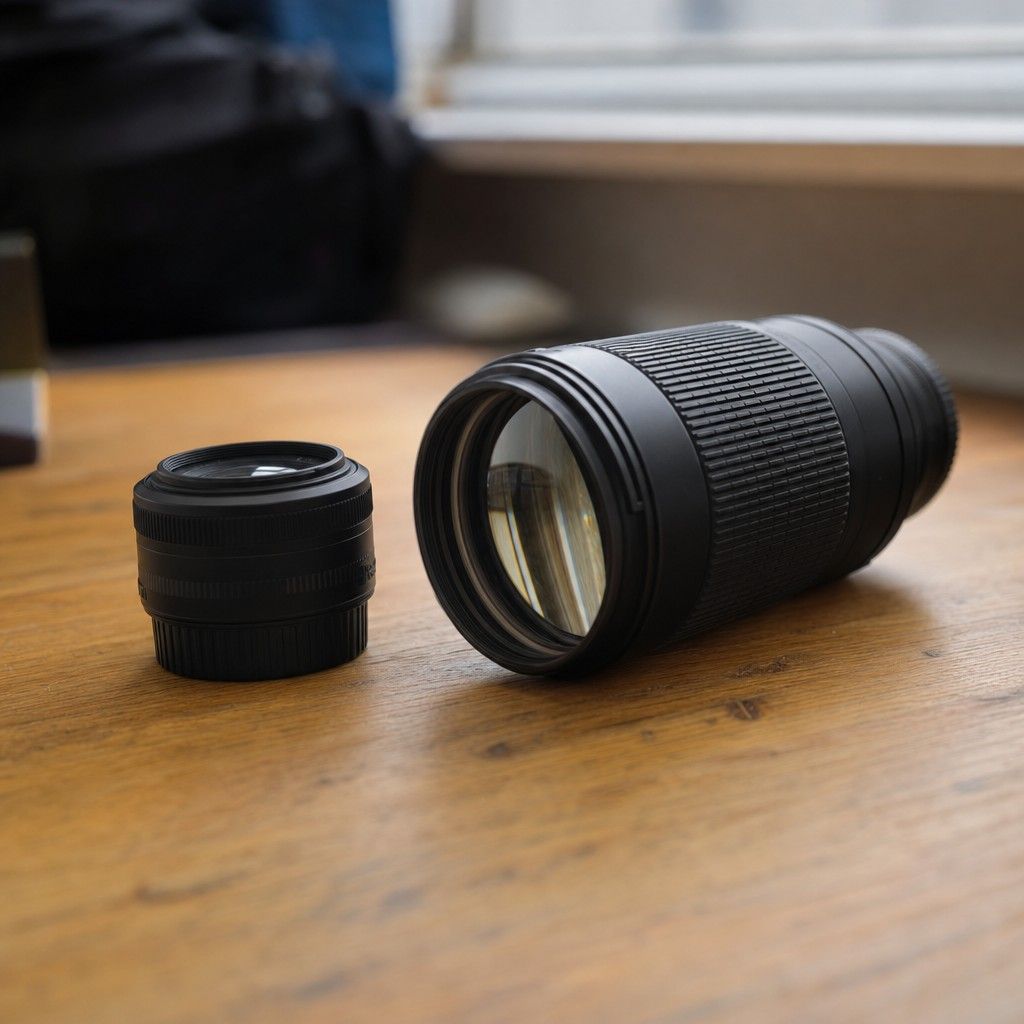
The f-number is the other key spec. A lower number means a larger opening in the lens, which lets in more light and allows a faster shutter speed.
Constant aperture zooms, like f/2.8, hold the same opening at every focal length. They gather more light, which helps in a dim gym or an evening game. They are heavier and cost more.
Variable aperture zooms, like f/4 to f/5.6, narrow as you zoom in. An f/5.6 at 200mm gathers less than a quarter of the light that an f/2.8 does. That gap matters indoors.
The decision breaks along one line.
- Outdoor daylight: a variable-aperture zoom like f/4 to f/5.6 is completely fine. Daylight is forgiving and you can push the shutter fast without fighting for light.
- Indoor gym or evening games: constant f/2.8 or a fast prime makes a meaningful difference. A variable zoom at f/5.6 in a school gym forces high ISO and slow shutters, and your photos show it.
If your kid plays indoors, aperture is the spec to care most about. For more on keeping a moving player sharp at long focal lengths, that guide covers the autofocus settings that go alongside the lens choice.
Zoom or prime for sports
A zoom lens covers a range, say 70 to 200mm, by turning the barrel. A prime is fixed at one focal length with no zoom ring.
A zoom is the practical choice for sports. Play moves, the distance from sideline to subject changes, and a zoom lets you reframe without moving your feet.
A prime is not useless. If your biggest problem is a dark gym and you are not far from the action, an 85mm f/1.8 can outperform a pricier slow zoom. The trade-off is that you cannot zoom.
A telephoto zoom for outdoors plus a fast prime for the gym covers both situations cleanly.
Buying used, and what to check
A used telephoto lens is a smart entry point. Lenses hold up well mechanically. The optics in a five-year-old 70 to 200mm are functionally identical to a new one.
What to check on a used lens:
- Glass: hold it up to a light and look through from both ends. Dust is common and harmless. Fungus (looks like a web or haze) and chips are not.
- Focus: mount it if you can, or ask the seller for a test shot at full zoom. Manual focus ring should turn smoothly.
- Aperture blades: open and close the aperture manually if the lens allows it. They should move cleanly without oil spots.
- Mount: the metal ring that attaches to the camera should be scratch-free with no wobble.
Price drops sharply once a lens is two generations old, even when the image quality changed very little. That gap between a current and a prior-generation 70 to 200mm is where the value is.
Weight and handling from the sideline
A 70 to 200mm zoom weighs around 700 grams to over a kilogram depending on aperture and brand. That is manageable handheld for short bursts, but heavy over a full game.
A monopod takes most of the weight off your arm without restricting movement the way a tripod does. You can still track a running player.
A long lens is steadier on a support, and the monopod guide covers what to look for.
If you are shooting from the same spot for 90 minutes, a monopod is worth considering before you spend money on a heavier constant-aperture zoom.
Matching the lens to your camera mount
A lens has to match your camera’s mount. Canon, Nikon, Sony, and Fujifilm each use different connections, and they are not interchangeable without an adapter.
Check your camera’s mount name before buying any lens. Search “[your camera model] lens mount” and you have the answer in seconds.
For the overall gear picture by budget, the camera and lens guide covers how body and lens choices work together. Third-party brands like Sigma and Tamron make telephoto zooms in most major mounts and frequently undercut first-party pricing.
How to compare options
Once you know the focal length range and aperture you need, it helps to browse what is available. You can compare telephoto zoom lenses on Amazon to see the price spread across constant and variable aperture models.
Sport-Phot earns a small commission from qualifying Amazon purchases, at no cost to you.
The price gap between f/2.8 and f/4 to f/5.6 models is the biggest variable. Decide on aperture first, then compare within that tier.
How to decide, in short
Run through these in order.
- Where does your kid play most? Outdoor field: focal length matters most. Indoor gym: aperture matters most.
- How large is the venue? Close court or diamond: 70 to 200mm is plenty. Big football field: consider something in the 200 to 300mm range.
- What is your light situation? Daylight outdoors: a variable-aperture zoom is fine. Evening or gym: look for f/2.8 constant or a fast prime.
- New or used? Used saves real money; check the glass and the focus.
- Do you already have a tripod or monopod? If not, budget for one before you buy the heaviest lens you can afford.
A 70 to 200mm f/4 lens and a monopod covers the outdoor sideline well. Add a 50mm or 85mm f/1.8 prime for the gym, and you have answered almost every situation a youth-sports parent shoots.