Most of the technique on this site is about freezing motion: fast shutter, burst mode, sharp player against a clear background.
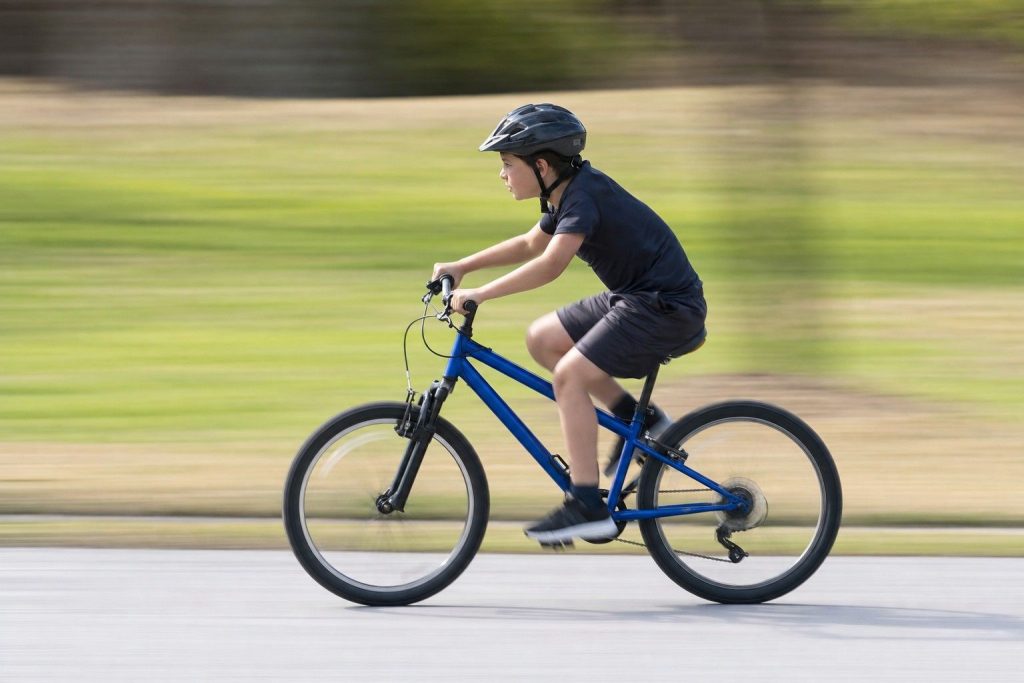
Panning is the opposite technique. You use a slower shutter and move the camera to match the subject’s speed, which keeps them sharp while the background smears into streaks. The result looks fast in a way a frozen shot never does.
It takes a few tries to get right, but once it clicks, it is one of the most eye-catching things a sideline photo can do.
What panning actually does to a photo
A standard action shot freezes everything. The player is sharp, the background is sharp, and the photo looks technically correct.
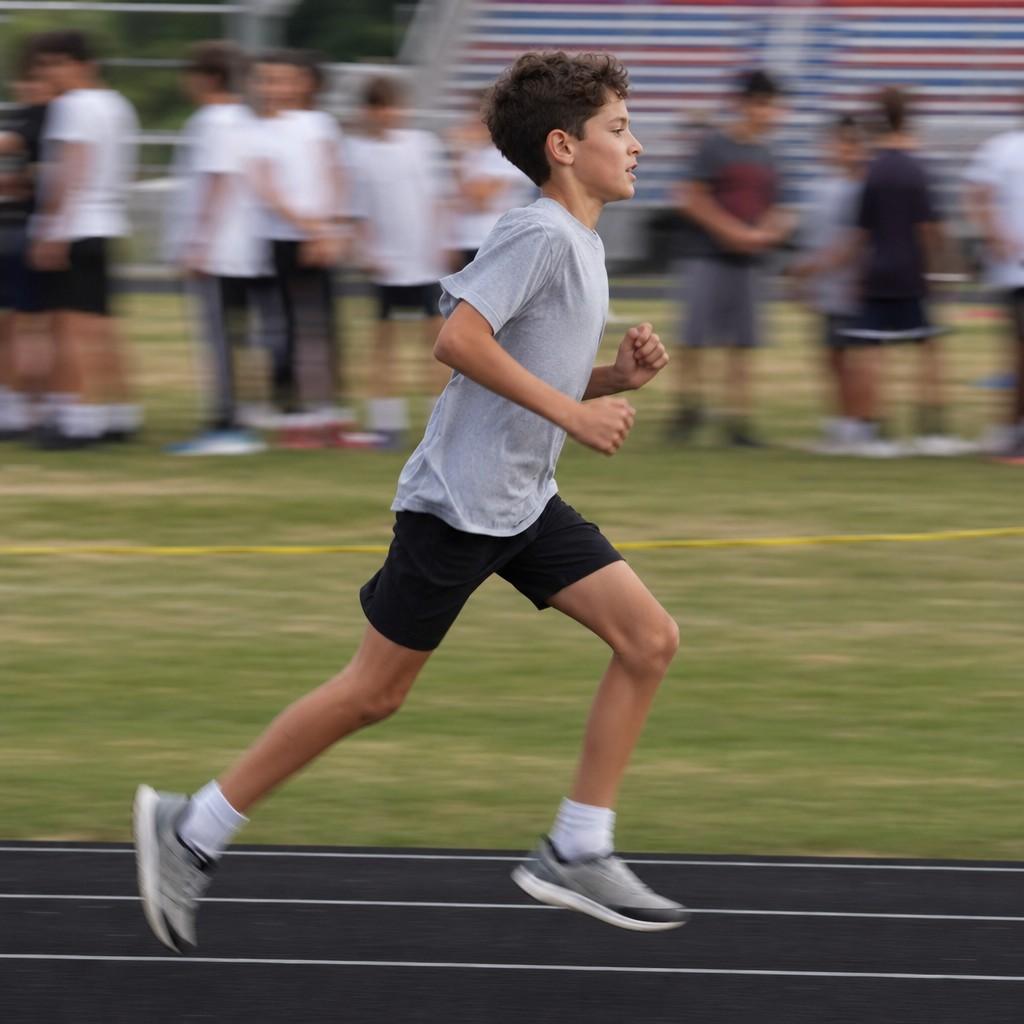
A panning shot makes the background blur in the direction of travel, which reads as speed. The player stays sharp because your camera moved with them. Everything behind them did not.
It is how race photographers make a car or a cyclist look like they are genuinely flying. The same technique works from the sideline at a track meet or a bike path.
The one rule is side-on motion only
Panning only works when the subject moves across your view from side to side.
A runner going left to right, a cyclist crossing the frame, a skater moving parallel to where you are standing. Those are good panning subjects. You can keep up with the motion smoothly.
A player running straight at the camera does not work. There is no sideways travel to track, so the technique falls apart. Head-on plays are better frozen with a fast shutter.
Shutter speed for panning
This is where panning breaks from everything else on the site.
Instead of 1/1000 second to stop motion, the target starting range for panning is 1/60 to 1/125 second. That is slow enough to let the background blur, but fast enough that a well-timed pan can keep the subject acceptably sharp.
The exact number depends on how fast the subject is moving:
- A runner or jogger: 1/60 or 1/80 second gives noticeable blur without losing the subject entirely.
- A cyclist or skater: 1/100 to 1/125 second, because they move faster across the frame.
Start at 1/100 and work slower from there. Going below 1/60 makes it very hard to keep any sharpness on the subject, even with a clean pan.
How to set this on a camera
Use shutter priority mode, marked S on most cameras or Tv on Canon. Dial in your target shutter speed. The camera handles ISO and aperture automatically.
Keep continuous focus active so the camera stays locked on the subject as they cross the frame. The same mode you would use for keeping the subject sharp while tracking a play is the right mode here.
Shoot in bursts through the pan. You will not time the single sharpest frame by hand. Fire a short burst while you are tracking and pick the best result afterward.
The panning motion itself
This is the physical technique. Get it wrong and no amount of shutter setting saves you.
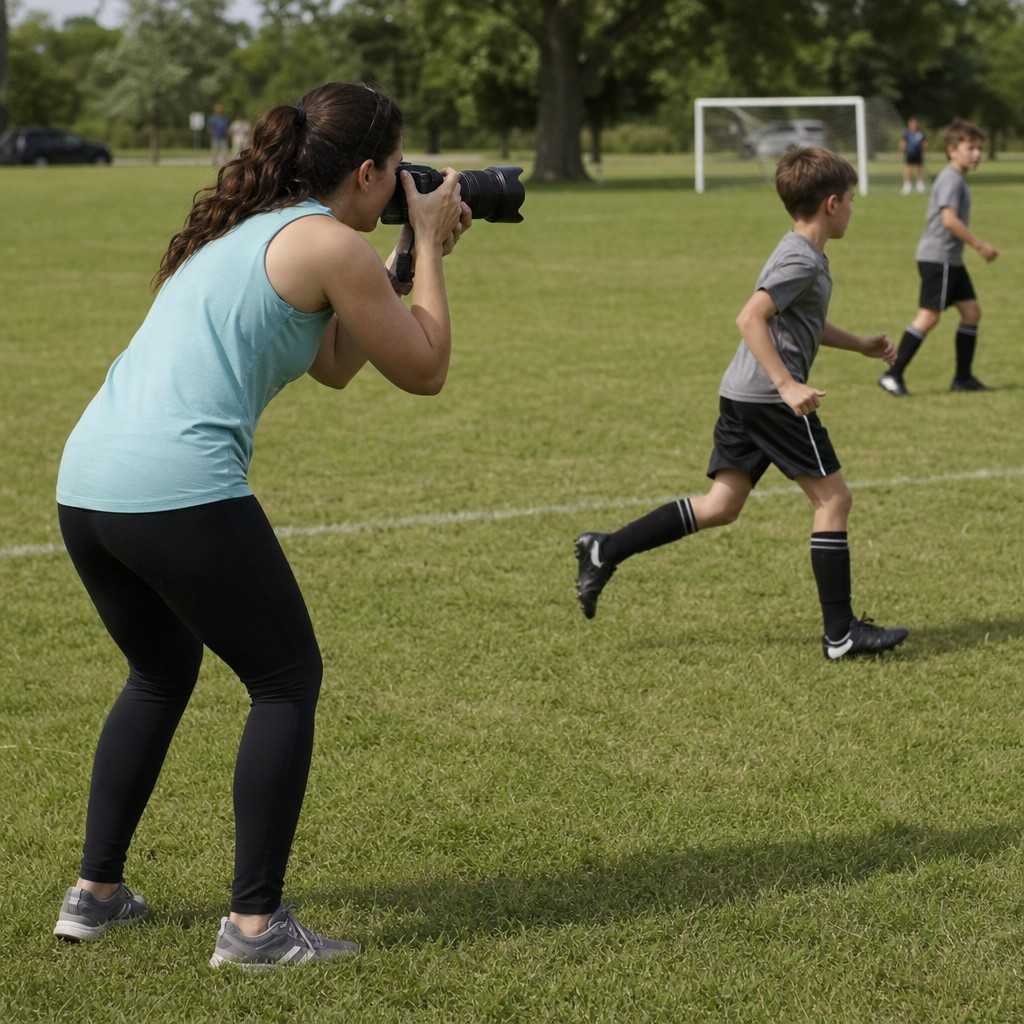
- Plant your feet wider than shoulder width and rotate from the hips, not the shoulders. You want a smooth arc, not a jerky swing.
- Keep your elbows in close to your body. Loose arms introduce wobble.
- Start tracking the subject before you press the shutter. Get the motion going, then commit.
- Follow through after the shot. The same follow-through a golfer uses after a swing. Stopping the camera at the moment of the shot kills the smoothness.
Start moving with the subject before you press the shutter, and keep moving after it. The shot happens in the middle of the motion, not as a standalone action.
The camera should feel like it is gliding, not lurching.
Good subjects for panning
Not every moment at a game is a panning candidate. The best results come from predictable, sustained side-on motion.
The most reliable panning subjects:
- A runner crossing the finish line, or a sprinter at a track meet, moving along the straight at a track and field event
- A cyclist on a road or path moving parallel to your position
- A skater on a flat section during fast skating at a rink
- A player running a route across the field in clear space
Less reliable:
- Players cutting or changing direction mid-run (the motion vector shifts)
- Crowded scenes where other players cross the frame
- Any play where the subject is coming toward you rather than across
Find a spot where you know the subject will travel in a straight line across your view, and wait for them to come to you.
What to expect at first
Panning has a low keeper rate. That is normal, not a sign that you are doing it wrong.
Expect most early attempts to look motion-blurred overall, with no clear sharp zone. That usually means either the shutter is too slow, the pan was not smooth, or the follow-through stopped too early.
A practical starting session:
- Find a friend cycling or jogging along a straight path.
- Set shutter priority to 1/100 second.
- Stand perpendicular to the path so the motion is side-on.
- Track from well before the shot, fire a burst of three or four frames, follow through.
- Check the results and adjust speed or technique.
Ten to fifteen attempts before the first clean keeper is a reasonable expectation. Experienced photographers still expect to discard most panning frames from a given sequence. Shoot a lot and pick the best.
Panning on a phone
Most phones do not give direct control over shutter speed, which makes standard panning difficult.
Some phones have a Pro or Manual mode that lets you set shutter speed. If yours does, set it to 1/100 second and follow the same technique as a camera.
If your phone only has an auto mode or a dedicated Action mode, those modes are tuned to freeze motion, which is the opposite of what panning needs. On a phone without shutter control, you can try the motion anyway and see what the auto exposure chooses, but the results will be unpredictable.
Setting expectations honestly: panning is a camera technique first. Phone results vary by model.
When not to pan
Panning is a creative choice, not a replacement for a sharp freeze shot.
If you just need a clean, clear photo of your kid in the play, freeze it. Fast shutter at 1/1000 second, outdoor daylight giving you the reach, burst mode. That is the reliable approach.
Use panning when you want one photo that shows speed as a feeling rather than just action as fact. It works well as a single standout shot in a sequence of sharp frames.
A quick practice checklist
Before your next panning attempt:
- Shutter priority mode set (S or Tv)
- Shutter speed between 1/60 and 1/125 second
- Continuous focus on
- Burst mode on
- Position perpendicular to the direction of travel
- Feet planted, elbows in, ready to rotate from the hips
- Track before the shot, follow through after
The more consistent your physical motion, the sharper the result. Adjust the shutter speed after you see the first batch, and keep shooting.
Once you land one, the editing step afterward is simple: panning shots rarely need much correction beyond a crop to tighten the framing.